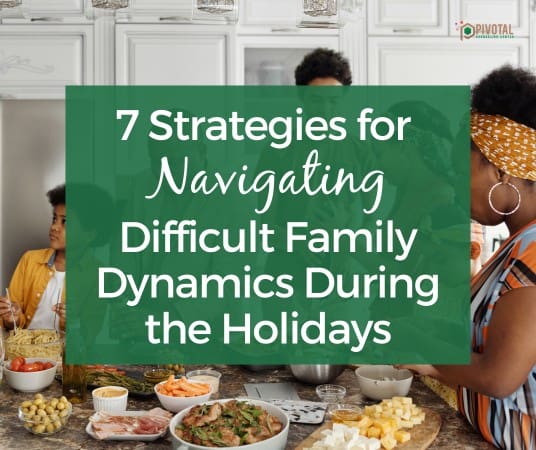
We often imagine the holiday season to be a time of joy, connection, and celebration. But for many people, the holidays come with a lot of stress, especially when there are difficult family dynamics involved. The thought of navigating difficult family dynamics during the holidays can leave people feeling tense, anxious, or overwhelmed during what is supposed to be a celebratory time of year.
Why are the holidays so stressful for families?
Why do the holidays tend to amplify existing challenges among family members. The holiday season brings people together who may not spend much time together during the rest of the year. When families gather, clashing personalities or unresolved conflicts often come bubbling to the surface. On top of that, the pressure to create a “perfect” holiday can heighten emotions, which can make it harder for people to be patient and understanding.
If this time of year stresses you out, you’re not alone. It’s normal for family members to differ, and sometimes those differences lead to upsetting situations or dynamics. Here’s the good news: While you can’t control others’ behavior, you can equip yourself with strategies to manage these situations in a way that prioritizes your well-being and mental health.
So, how can you navigate challenging family dynamics with care this holiday season?
1. Acknowledge how you feel
Before you attend a family gathering this holiday season, take some time to check in with yourself about how you’re feeling. Are you feeling nervous, angry, or drained? Identifying your emotions and acknowledging how you feel gives you a chance to prepare mentally and set realistic expectations. Remember, it’s okay to feel however you’re feeling—your emotions are valid. You’re not a bad person for struggling with difficult family dynamics during the holidays.
2. Be clear about your boundaries
Boundaries are not about being rude; they’re about protecting your mental health while maintaining your relationships for the long term. Figuring out what your boundaries are ahead of time makes it easier to communicate your needs in the moment.
Keep in mind that boundaries outline what you will do, not what anyone else will do. This is because it’s not possible to control anyone other than yourself – you can’t force anyone to act a certain way, even if you feel it would help your relationship.
If certain topics (like politics, your body, your personal life, or career choices for exaple) always spark tension, it’s okay to say, “I’d rather not talk about that today.” Share your boundaries ahead of time if possible, so everyone knows where you stand.
It’s also okay to set boundaries around your time and energy. For example, you might decide to leave a gathering early or skip one altogether if it feels too overwhelming or if you need time to rest.
3. Make a plan for difficult conversations
Family gatherings can sometimes bring up triggering comments or awkward interactions. You can’t always predict what will happen, but having a plan can help you stay calm in the moment. Think of what you’re concerned about beforehand, and consider options for what you’ll do if those things happen. It can help to practice your options a few times before you attend a holiday event, so that your coping skills are easier to access in distressing moments.
These are some things to keep in mind:
- Pause before you respond: You don’t have to react instantly. Practice taking deep breaths, or make a plan for how you can excuse yourself briefly if you need to collect yourself.
- Have topics you can pivot to: How can you redirect the conversation if you need to? Think about who will be in attendance at holiday events and consider what safe topics you can discuss. If someone brings up something uncomfortable or inappropriate, you might say, “Let’s save that for another time—how’s your new job going?”
- Know when to walk away: What are your limits for this event? Have an idea of where you’ll draw the line in advance. You’re allowed to say, “I don’t feel comfortable continuing this conversation,” and change the subject or leave the room.
4. Practice compassion
Difficult family dynamics can bring up many complicated emotions, and treating yourself (and others) with compassion can make a painful situation less distressing. Think about it – do you tend to react well when people are unkind to you? Does it feel good to beat yourself up about everything? Probably not.
While it’s important to hold others accountable for their actions, it can also help to approach ourselves and our loved ones with compassion. Remember that many people act out of their own unresolved pain, stress, or insecurity. The painful things that they say may be more about their feelings about themselves, rather than about you.
Don’t forget to extend compassion to yourself as well. You’re doing the best you can in a challenging situation—give yourself credit for showing up and trying, even when things are difficult.
5. Take a break if you need to
There’s no rule that you have to stay at an event for the entire time. You don’t get extra points for trudging through without a break. Holiday gatherings can be intense and if you start to feel overwhelmed, it’s okay to step away. Go outside for fresh air, find a quiet corner to breathe, or check in with a trusted friend via text. Giving yourself space to decompress can help you re-enter the group with more patience and clarity.
6. Remember that you’re allowed to stand up for yourself and others
It’s a common myth that family harmony, especially during the holidays, means putting up with harmful behavior. The truth is, tolerating disrespect, abuse, or dehumanization for the sake of family peace can harm relationships in the long run. Healthy relationships are built on mutual respect and understanding, not one-sided sacrifices.
Standing up for yourself and others, or walking away from toxic situations doesn’t make you a bad family member—it makes you someone who values their own worth and understands the power of speaking up.
7. Consider working with a therapist
If family dynamics feel overwhelming or leave you struggling during the holidays (or even long after), therapy can be a helpful resource.
Working with a therapist can help you:
- Understand the dynamics in your family and how they affect you
- Build confidence in your communication and conflict resolution skills
- Explore ways to heal and move forward, whether individually or as a family
Therapy is a space where you can process your emotions without judgment and develop tools to navigate challenging family relationships with greater confidence and peace.
Family relationships aren’t always easy, and it’s okay to acknowledge that. Remember that you don’t have to navigate these challenges alone. Support is available, and reaching out to a therapist can be a meaningful step toward finding peace during the holiday season. We have locations in Woodstock, Illinois, Lake in the Hills, Illinois, and Elgin, Illinois. If you are in need of someone to help, please consider giving us a call at (815) 345-3400.
Navigating difficult family relationships? Learn more about individual counseling at Pivotal Counseling Center.