Table of Contents
- How Does Chronic Pain Affect Mental Health?
- What is chronic pain?
- Why is chronic pain so hard on mental health?
- Frequently Asked Questions About Chronic Pain And Mental Health
- How can you cope when chronic pain impacts your mental health?
- Chronic pain often contributes to symptoms of anxiety and depression. Learn more about our individual counseling services.
5 Ways to Cope with Chronic Pain and Protect Your Mental Health
- Join a chronic pain support group.
- Practice self-compassion instead of pushing through pain.
- Pace activities to avoid symptom flare-ups.
- Prioritize sleep, nutrition, hydration, and movement.
- Work with a therapist experienced in chronic pain.
How Does Chronic Pain Affect Mental Health?
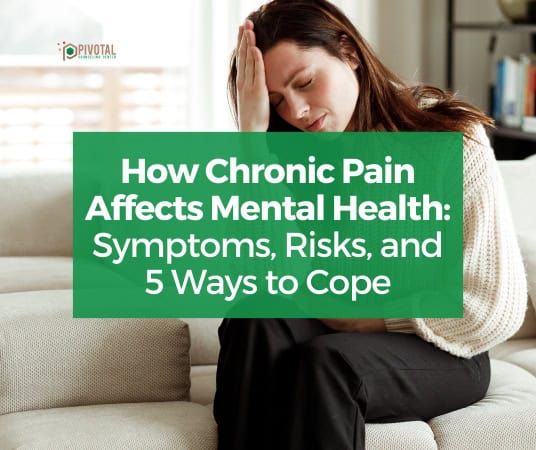
Chronic pain can significantly affect mental health by increasing the risk of depression, anxiety, stress, sleep problems, social isolation, and reduced quality of life. Research shows that people living with chronic pain are more likely to experience mental health challenges because persistent pain affects mood, daily functioning, relationships, and emotional well-being.
What is chronic pain?
Chronic pain is pain that lasts longer than three months and continues beyond the expected healing period of an injury or illness.
We all experience pain from time to time in our lives, but for people who experience chronic pain, the impacts on mental health can be severe. After an injury or illness, we may expect to experience pain, but sometimes that pain doesn’t go away when we think it will.
Why is chronic pain so hard on mental health?
When you live with pain every day, it can take a toll on your mental health. We have an emotional response to experiencing pain. When that pain is prolonged, the emotional response is prolonged. The way that your symptoms impact your everyday life can change the way you feel about yourself, affecting your self-worth and self-esteem.
The American Psychological Association estimates that 1 in 20 people with chronic pain also experience depression and anxiety – or around 12 million people in the US.
You may feel a sense of shame for what you’re experiencing, even though it’s not your fault. When your body isn’t functioning the way it’s “supposed” to, it can feel like a betrayal, even when there’s no one to blame, so the blame is often placed on yourself. Finding ways to manage these complicated feelings while dealing with physical pain can be tricky, especially when you have other responsibilities to take care of.
How else does chronic pain impact mental health?
- Unrelenting physical discomfort impacts mood
- Dismissal from medical providers is frustrating
- Stress from dealing with insurance denials and coverage issues
- Financial problems from paying for care and limited ability to work
- Relationship strain as a result of managing your symptoms
- Lost friendships when people don’t know how to deal with your diagnosis
- Anxiety about your condition getting worse
- Pain impacting the ability to get quality sleep
- Depression of acknowledging the life you no longer get to live
- Isolation due to your symptoms disrupting your life
Each one of these would be difficult to deal with on its own. Combined, they can create an overwhelming mental health crisis if ignored for too long. People who deal with chronic pain need ongoing support and mental health care in addition to physical health care to cope with their symptoms.
Frequently Asked Questions About Chronic Pain And Mental Health
Can chronic pain cause depression?
Yes. Chronic pain and depression often occur together because ongoing pain can affect brain chemistry, daily functioning, sleep quality, and emotional well-being.
Can chronic pain cause anxiety?
Yes. Many people with chronic pain experience anxiety related to worsening symptoms, medical appointments, finances, and uncertainty about the future.
Does therapy help with chronic pain?
Research suggests that therapy approaches such as CBT, ACT, and mindfulness-based interventions can help people manage the emotional impact of chronic pain.
What type of therapist helps with chronic pain?
Mental health professionals experienced in health psychology, chronic illness, pain management, CBT, and ACT may be especially helpful.
Why does chronic pain affect mental health?
Persistent pain activates stress responses in the body and can disrupt sleep, work, relationships, and daily activities, contributing to emotional distress.
How can you cope when chronic pain impacts your mental health?
You may not be able to take away your pain on your own, but there are things you can do to cope and improve your mental health so you don’t feel like you’re in a crisis. Here are some places to start:
1. Join a chronic pain support group
One of the worst parts of chronic pain and illness is how isolating the experience can be. Losing relationships and friendships with people who don’t get how you’re feeling or how they can show up for you is unbelievably painful when you’re already suffering. Seeing your support system dwindle in real time can take a real toll on your feelings about yourself and your worth as a person, but it’s important to remember that this is unfortunately a common experience for people with chronic pain.
It doesn’t mean that you’re any less worthy of care and friendship than you were before. It just means that lots of people don’t know how to show up when someone is struggling. Joining a support group of people who are also chronically ill will help you understand that it’s not actually about you, and help you feel less alone.
2. Practice self-compassion instead of pushing through pain
The pain doesn’t “win” if you let yourself take breaks or adjust your expectations of yourself. Some people feel pressure to push through the pain and live their lives the way they did before the pain started, and that can set you up to fail. It’s hard to adjust to the fact that you can’t function the way that you used to, but it’s okay to let yourself off the hook when you’re not able to do certain things.
It’s hard to find a balance between doing everything exactly the same as you used to and isolating yourself from everything because you’re ill, and it might take some time to find the right balance for you. It’s important to be kind to yourself as you find what works for you in this new season of your life.
3. Pace activities to avoid symptom flare-ups
Pacing is often suggested to chronic pain patients as a way to conserve their energy instead of overdoing it. Keeping track of your energy levels, pain levels, mood, and other relevant info can help you pace yourself effectively.
There are often good days and bad days when you have chronic pain, and on the good days it’s extremely tempting to go out and do all the things you normally can’t do. However, overdoing it can often lead to a crash the next day, and leave you feeling even worse. Pacing suggests that you conserve your energy, and limit yourself to doing one third or one half of what you think you can do, so you can leave some gas in the tank for the bad days.
4. Prioritize sleep, nutrition, hydration, and movement
When you’re experiencing chronic pain, going back to the basics can help. Focusing on getting quality sleep, getting enough to eat, hydrating, moving your body if you can, and engaging in self-care activities like deep breathing and mindfulness can make a difference as you find ways to manage your pain.
These won’t cure your pain, but they’ll help set you up for fewer emotional ups and downs if you know your basic needs are taken care of.
5. Work with a therapist experienced in chronic pain
Working with a therapist who understands the impact of chronic pain on mental health can make an enormous difference to your quality of life. Therapy gives you a dedicated space to talk out how you’re feeling and to hold space for the complexity of your life with chronic pain.
If your pain is too overwhelming to make it into the office for an in-person appointment, many therapy offices offer online therapy so you can get the benefits of therapy from wherever is most convenient and comfortable for you.
Chronic pain often contributes to symptoms of anxiety and depression. Learn more about our individual counseling services.
Are you overwhelmed by chronic pain? We can help. We have locations in Woodstock, Illinois, Lake in the Hills, Illinois, and Elgin, Illinois, and we offer Online Counseling throughout Illinois. If you are in need of someone to help, please consider giving us a call at (815) 345-3400.