What can you do when you feel anxious and overwhelmed?
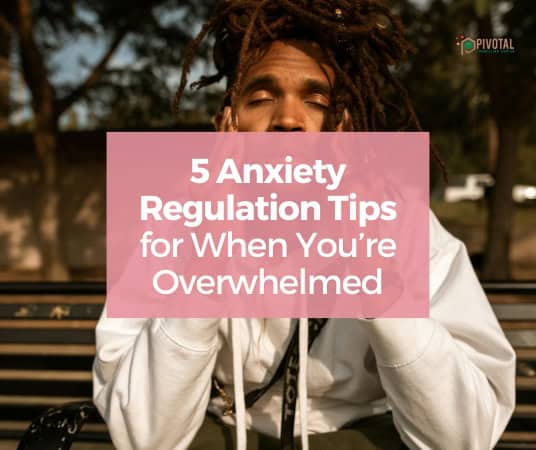
Most of us don’t know, and that’s why it can be so hard to feel better in moments of overwhelm. Anxiety regulation takes practice, so here are some skills to practice for the next time you’re overwhelmed.
Why is anxiety so overwhelming?
When you’re overwhelmed, your rational, problem-solving brain is offline. Anxiety pushes your system into hypervigilance, or fight-flight-freeze mode. This is a physiological state that’s designed to protect you from danger. For humans, this was a protective response designed to keep us safe when we were out in the world, encountering things like predators.
Now, though, our anxiety can get triggered over much less life-and-death stuff, but our bodies don’t know that. They still react the same way, by preparing us to fight, flee, or freeze in place to stay safe. All of that means that your body prepares to defend itself, which leaves rational thinking behind. This makes it harder to focus on ways to calm down.
What happens when anxiety is triggered?
- your heart rate goes up
- your breathing quickens
- your digestion slows
- your muscles tense
- your rational brain checks out
In a moment that’s not life-or-death, this extreme response can be really upsetting. When you’re going about your day and get totally derailed by something like an email, it feels awful. It’s hard to shake off that feeling and get back to your normal routine without feeling like there’s something wrong with you.
It’s important to remember that this is a physiological process that you don’t have control over, so there’s nothing wrong with you. Your body is picking up on signals and reacting to them to keep you safe, not trying to make you feel crazy. It’s possible to notice the reaction you’re having, and take action to regulate your anxiety so you feel better and more in control.
How can you calm yourself down in those moments where your anxiety gets out of control and you feel overwhelmed? Here are 5 places to start:
1. Breathing
When you’re in fight or flight mode, your breathing rate will probably increase, to prepare you to run. One thing you can do to combat this is to intentionally slow down your breathing until you feel your body relax. Controlling your breath helps stop you from hyperventilating and forces your body to slow back down.
There are many different breathing techniques that can help you calm down. Here are a few to try:
- Box breathing: inhale for a count of 4, hold for a count of 4, exhale for a count of 4, hold for a count of 4, repeat
- 4-7-8 breathing: inhale for a count of 4, hold for a count of 7, exhale for a count of 8, and repeat
- Diaphragmatic breathing: inhale deeply so that your abdomen rises, not your chest. Hold for however long feels comfortable, then exhale fully and repeat
2. Temperature
In Dialectical Behavior Therapy, a therapy modality designed to teach emotional regulation and distress tolerance skills, there is a skill called TIPP that teaches you to deal with upsetting moments by using temperature to cool your body and bring your heart rate back down. The shock of the cold can help you shift out of the anxious fight or flight mode and back into your rational brain, where you’re in control.
To do this, you can take a cold shower, hold an ice cube in your hand, hold onto an ice pack, put a cold cloth on your face or neck, or even submerge your face in cold water. If you’re using ice or an ice pack, make sure you don’t hurt your skin by leaving it too long.
3. Movement
When you’re in this tense, anxious state, your body is ready to move. Engaging in a burst of activity, like jumping jacks, going for a walk or run, or even dancing, is a great way to help you burn off that energy.
Exercise also releases feel good chemicals called endorphins, which help to take you from overwhelmed to regulated as another bonus. You don’t have to do it for a long time, either. Even 10 or 15 minutes will help you start to shift back to your more regulated state where you can feel less distressed.
4. Redirect Your Behavior
Sometimes we feel anxiety because we’re not doing anything and we need to take action. This can happen a lot when people find themselves in a doomscrolling spiral – we see an endless parade of horrors on a screen, then feel frozen with what to do about it.
Finding a way to take action on the things that matter to us makes us feel less helpless and less out of control. How can you be active instead of passive?
5. Tell someone
It’s important to remember that experiencing anxiety doesn’t mean that there’s something wrong with you. In fact, anxiety is incredibly common. The next time you feel overwhelmed with anxiety, instead of keeping it to yourself, how would it feel to share your feelings with someone else? It’s vulnerable to share those thoughts with someone else, but you might find that others can relate more than you think.
Finally, it might help to bring in a therapist or other mental health professional. Anxiety is very treatable. Working with a therapist can help you find coping strategies that actually work for you and give you space to practice them so that you feel confident using them going forward.
How can you remember to use these anxiety regulation skills in the moment?
The key is to practice them before you’re feeling anxious. When you do something over and over, it becomes second nature. Remember, when you’re feeling overwhelmed with anxiety, your rational brain is offline, so the more you practice, the better off you’ll be the next time you’re overwhelmed.
Practice deep breathing exercises, using temperature to calm down, moving your body in quick little bursts, taking action, and talking it out in your day to day life. Set aside a few minutes a day to practice these coping skills so that the next time you’re feeling anxious or overwhelmed you’ll know exactly what to do and how to do it.
Frequently Asked Questions about Regulating Anxiety
What is the fastest way to regulate anxiety when overwhelmed?
There are no guarantees, but using breathing techniques like box breathing, using temperature like a cold shower or holding an ice cube in your hand, or intense movement like running in place as fast as you can for two minutes can be quick ways to bring down anxiety when you’re overwhelmed.
What is the the TIPP skill?
The TIPP skill is a DBT (Dialectical Behavior Therapy) skill that is used to help remind you what to do in moments of anxiety. TIPP is an acronym that stands for Temperature, Intense exercise, Paced Breathing, and Progressive muscle relaxation. These actions help slow you heart rate, distract you from the anxiety, increase your oxygen intake and trigger the parasympathetic nervous system response, which helps you calm back down.
How do breathing exercises like box breathing help anxiety?
Breathing exercises like box breathing help anxiety for a couple of reasons. First, it forces you to focus on your breath instead of whatever is making you anxious. Second, it slows down your heart rate, lowers your blood pressure, and increases your oxygen intake, which helps you calm down.
Anxiety is overwhelming, but it’s treatable. If you’re struggling with anxiety, we can help.
We have locations in Woodstock, Illinois, Lake in the Hills, Illinois, and Elgin, Illinois. If you are in need of someone to help, please consider giving us a call at (815) 345-3400.